
Műsor:
Bruch: I. (g-moll) hegedűverseny, op. 26
Respighi: Róma fenyői
Kodály: Budavári Te Deum
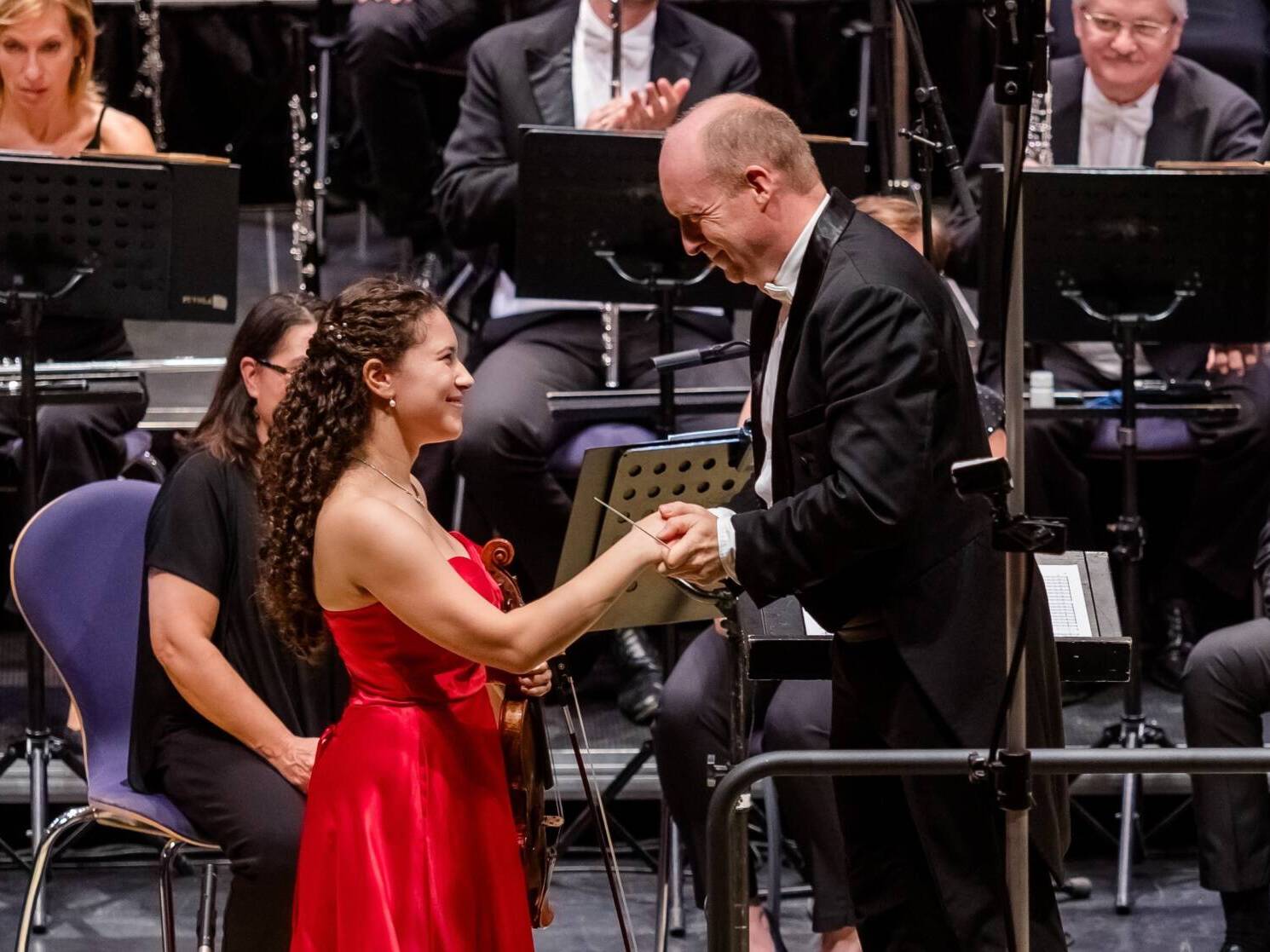
Közreműködik: Rendes Ágnes, Bódi Marianna, Szerekován János, Wágner Lajos – ének/ Abouzahra Mariam – hegedű / Kodály Filharmonikusok / Kodály Kórus (karigazgató: Kocsis-Holper Zoltán)
Vezényel: Somogyi-Tóth Dániel
Max Bruchnak, a 19. század kiváló német komponistájának ma már csak kevés művét játsszák, noha operákkal és oratóriumokkal is gazdagította a zeneirodalmat. I. g-moll hegedűversenye azonban kivételt jelent, mert a romantikus korszak hegedűirodalmának egyik legnépszerűbb és legtöbbet játszott darabja. A versenymű 1867-ben Joachim József szólójával bemutatott végleges formája három, egymáshoz közvetlenül kapcsolódó részből áll. Nyitótétele a Vorspiel (előjáték) címet viseli. Már ennek során megfigyelhető, hogy Bruch a szokásosnál fontosabb szerepet szán a szimfonikus szövésű zenekari szólamoknak. A középső, lassú tétel különös szépségű dallamával ragad meg, majd a finálé szilaj, karakteres zenei anyaga remek lehetőséget ad a szólista számára, temperamentumának és virtuozitásának bemutatására.
Ottorino Respighi római triptichonjának második darabja, a Róma fenyői című szimfonikus költemény nem egyszerűen egy város zenei portréja. A mű Róma különböző helyszíneit és történelmi korszakait kapcsolja össze egyetlen képzeletbeli utazásban. Az 1924-ben komponált darab a város fenyőfáival a középpontban idézi meg az ókori múltat, a gyermekkor játékos világát, a római katakombák titokzatosságát és a modern város pezsgő életét. A mű négy tétele négy különböző hangulatú jelenetet rajzol elénk. A Villa Borghese kertjében játszó gyermekek élénk, játékos zenéjét a katakombák mélyéről feltörő komor, archaikus dallamok követik. A Gianicolo dombján éjszaka megszólaló fülemüle hangja különleges, álomszerű pillanatot teremt, majd a zárótételben az Via Appia fölött felkelő nap látványa monumentális finálévá szélesedik. Respighi rendkívül változatos hangszerelése a zenekart szinte festőpalettává alakítja: ragyogó színek, távoli harangok, madárhangok és hatalmas zenei tömbök elevenítik meg az Örök várost. A Róma fenyői így lesz egyszerre tájleírás, történelmi látomás és lenyűgöző zenekari freskó.
Kodály Zoltán Te Deuma 1936-ban, Budavár törököktől való visszafoglalásának 250. évfordulójára készült, A mű a latin Te Deum dícséret szövegére épül, amely évszázadok óta az öröm, a hálaadás és a keresztény közösségi hit egyik legfontosabb himnusza. Kodály kompozíciójában a hagyomány és a korszerűség különleges egységet alkot. A gregorián gyökerek, Palestrina szelleme, a magyar népzene dallamvilága és a 20. századi hangzáskép egyaránt jelen van a partitúrában. A kórus és a szólisták váltakozó, majd egyre inkább összefonódó megszólalása az egyéni és a közösségi hang egymásra találását is kifejezi.A Budavári Te Deum egyszerre monumentális és személyes hangvételű mű. A fenséges kórus- és zenekari szakaszok mellett bensőséges imádságos pillanatok kapnak helyet, míg a kompozíció végén a zene ünnepélyes, felemelő erővel csendesedik el.
– baljos –
Te Deum
Program:
Bruch: Violin Concerto No. 1 in G minor, Op. 26
Respighi: Pines of Rome
Kodály: Budavári Te Deum
Featuring: Ágnes Rendes, Marianna Bódi, János Szerekován, Lajos Wágner – vocals / Mariam Abouzahra – violin / Kodály Philharmonic / Kodály Choir (choir director: Zoltán Kocsis-Holper)
Conductor: Dániel Somogyi-Tóth
Today, few works by Max Bruch, the outstanding 19th-century German composer, are still performed, even though he enriched the musical repertoire with operas and oratorios as well. His Violin Concerto No. 1 in G minor, however, is an exception, as it is one of the most popular and frequently played pieces in the violin repertoire of the Romantic era. The final version of the concerto, premiered in 1867 with a solo by Joseph Joachim, consists of three directly connected movements. Its opening movement is titled Vorspiel (Prelude). Already here it can be observed that Bruch assigns a more important role than usual to the symphonically woven orchestral parts. The middle, slow movement captivates with its exceptionally beautiful melody, and then the fierce, characterful musical material of the finale provides an excellent opportunity for the soloist to showcase their temperament and virtuosity.
The second piece of Ottorino Respighi’s Roman triptych, the symphonic poem titled Pines of Rome, is not simply a musical portrait of a city. The work connects various locations and historical eras of Rome in a single imaginary journey. Composed in 1924, the piece—with the city’s pine trees at its center—evokes the ancient past, the playful world of childhood, the mystery of the Roman catacombs, and the bustling life of the modern city. The four movements of the work sketch four scenes of different moods before us. The lively, playful music of children playing in the gardens of the Villa Borghese is followed by somber, archaic melodies rising from the depths of the catacombs. The sound of a nightingale singing at night on the Janiculum hill creates a special, dreamlike moment, and then in the final movement, the sight of the sun rising over the Via Appia broadens into a monumental finale. Respighi’s extremely varied orchestration transforms the orchestra almost into a painter’s palette: brilliant colors, distant bells, birdsong, and massive musical blocks bring the Eternal City to life. Pines of Rome thus becomes simultaneously a landscape description, a historical vision, and a stunning orchestral fresco.
Zoltán Kodály’s Te Deum was composed in 1936 for the 250th anniversary of the recapture of Buda Castle from the Turks. The work is based on the text of the Latin Te Deum hymn of praise, which for centuries has been one of the most important hymns of joy, thanksgiving, and Christian communal faith. In Kodály’s composition, tradition and modernity form a unique unity. Gregorian roots, the spirit of Palestrina, the melodic world of Hungarian folk music, and a 20th-century soundscape are all present in the score. The alternating, and then increasingly intertwining voices of the choir and soloists also express the coming together of the individual and the communal voice. The Budavári Te Deum is a work of both monumental and personal tone. Alongside majestic choral and orchestral sections, intimate moments of prayer find their place, while at the end of the composition, the music fades away with a solemn, uplifting power.
– baljos –
Esemény helyszíne: Kölcsey Központ, Nagyterem
Esemény dátuma: 2026.10.13. 19:00