
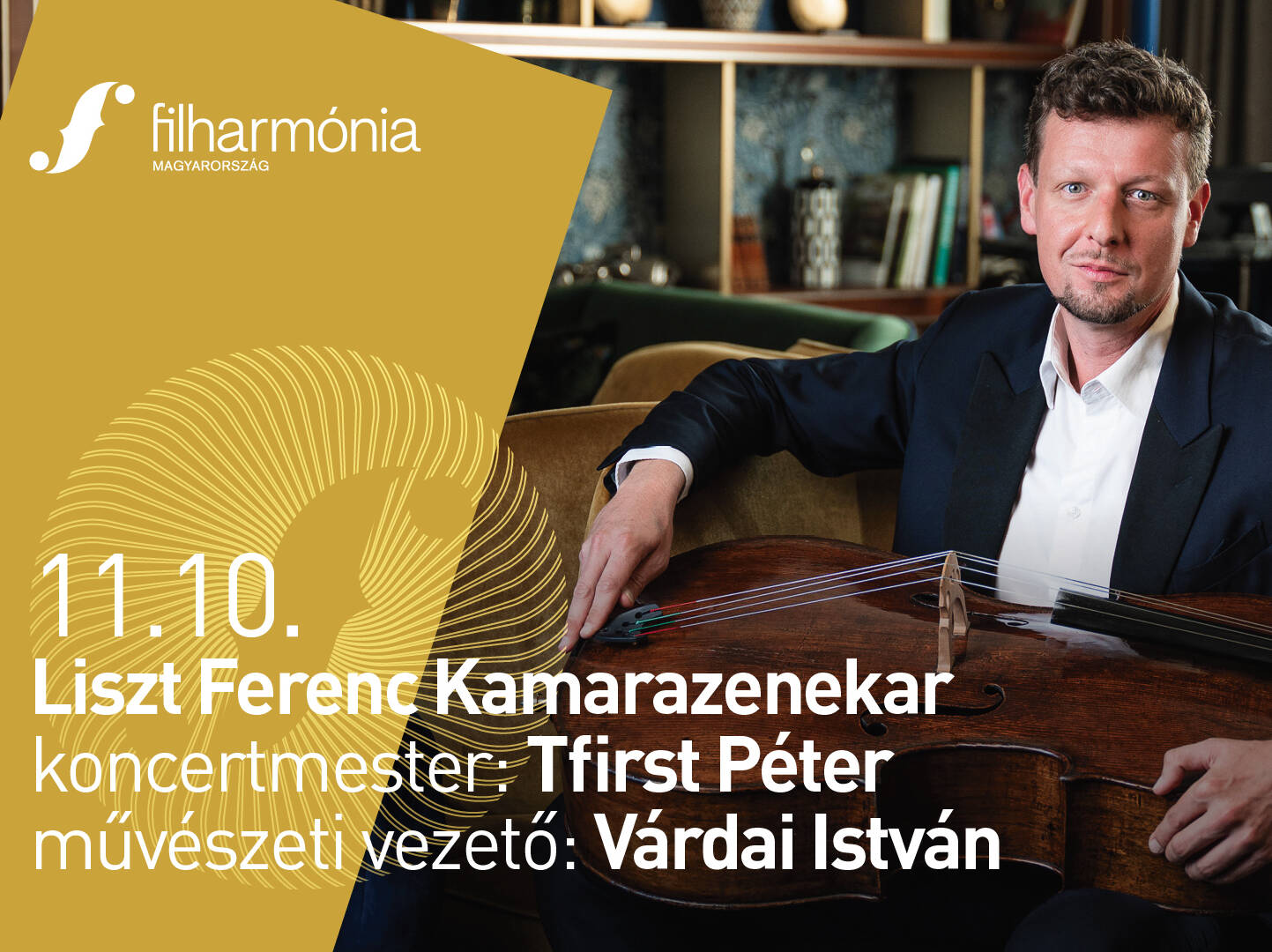
(Franz Liszt Chamber Orchestra)
Bartók Béla, Dohnányi Ernő és Weiner Leó szinte egyidőben alkottak, és valahol mindannyiuk számára mintaként szolgált Liszt Ferenc. A kérdés pedig mindannyiukat egész életükön át foglalkoztatta: milyen módon élnek tovább régi korok a mai zenében, és mennyire kell egy magyar zeneszerzőnek magyarosnak lenni? A koncerten elhangzó műveik tulajdonképpen erre keresik a választ. Bartók Román népi táncai a népzenegyűjtéséből táplálkoznak, és szép lenyomatai annak, ahogyan Bartók mindenféle népzenét magába szívott, és modernitása sokszor éppen abban állt, hogy igyekezett azt minél inkább eredeti formában megmutatni. Dohnányi igazi városi ember volt, kezdettől fogva erős nyugati kötődéssel. A fiatalkori szerenádját Bécsben mutatták be, a mű pedig egy londoni turnén keletkezett. Ez a zene sokkal inkább a német romantikusok rokona, mint a magyaroké. A még inkább városi Weinert – akinek már egy külső budapesti kerület is messzi vidéknek számított – szinte egész életében nyomasztotta a Bartók és Kodály által meghatározott közvélemény, hogy egy magyar szerzőnek márpedig magyaros zenét kell írni. És bár ő maga sosem gyűjtött népdalokat, egy sor olyan művet komponált, melyek népi gyökerűek. A 2. Divertimento tulajdonképpen népies tánctételek füzére, ebben található a híres Rókatánc is. Bartók is írt Divertimentót, de svájci felkérésre és Svájcban. Ebben a műben nem a Kárpát-medence, hanem a barokk concertók világa adta a kiindulópontot, és bár a zene messzemenőkig bartóki, mégis a régi korok előtt tiszteleg. Zárásként Liszt Magyar rapszódiáiból szólnak részletek, melyek valahol mindezen művek korai rokonai: magyarosak, romantikusak, virtuózok, szenvedélyesek. Kalandozzon Ön is koroktól és stílusoktól függetlenül a magyar zene meghatározó szereplőivel!
Egy kis részlet Dohnányi művéből:
ELŐADÓK:
Liszt Ferenc Kamarazenekar
koncertmester: Tfirst Péter
művészeti vezető: Várdai István
MŰSOR:
Bartók Béla: Román népi táncok
Dohnányi Ernő: Szerenád, op. 10
Weiner Leó: Divertimento, No. 2
Bartók Béla: Divertimento
Liszt Ferenc: Magyar rapszódiák
Béla Bartók, Ernő Dohnányi, and Leó Weiner were almost exact contemporaries, and Ferenc Liszt served, in one way or another, as a model for all three of them. One question preoccupied each of them throughout their lives: how do earlier musical eras live on in the music of the present, and to what extent should a Hungarian composer sound Hungarian? The works heard in this concert can, in a sense, be understood as different answers to that question.
Bartók’s Romanian Folk Dances grew directly out of his folk-music collecting. They are a beautiful reflection of the way Bartók absorbed many different kinds of folk music, and how his modernity often lay precisely in his effort to preserve and present that music as faithfully as possible in its original form.
Dohnányi, by contrast, was very much an urban figure, with strong Western European ties from the beginning of his career. His youthful Serenade was premiered in Vienna, while the work itself was composed during a tour of London. Its musical language is far more closely related to the German Romantic tradition than to specifically Hungarian styles.
Weiner was even more of a city-dweller — for him, even an outer district of Budapest could seem like the distant countryside. For much of his life, he felt the pressure of a musical climate shaped by Bartók and Kodály, according to which a Hungarian composer was expected to write music that sounded unmistakably Hungarian. Although Weiner himself never collected folk songs, he composed a number of works rooted in folk traditions. His Divertimento No. 2 is essentially a sequence of folk-inspired dance movements, including the famous Fox Dance.
Bartók also wrote a Divertimento, but his was commissioned in Switzerland and composed there. In this work, the point of departure is not the musical world of the Carpathian Basin, but that of the Baroque concerto. Although the music is unmistakably Bartókian, it is also a tribute to earlier musical eras.
To conclude the programme, excerpts from Liszt’s Hungarian Rhapsodies will be heard. In many ways, they can be seen as early relatives of all the works on the programme: Hungarian in character, Romantic, virtuosic, and passionate.
Join us on a journey through eras and styles with some of the defining figures of Hungarian music.
Esemény helyszíne: Szeged, Szegedi Nemzeti Színház
Esemény dátuma: 2026.11.10. – kedd 19:00